
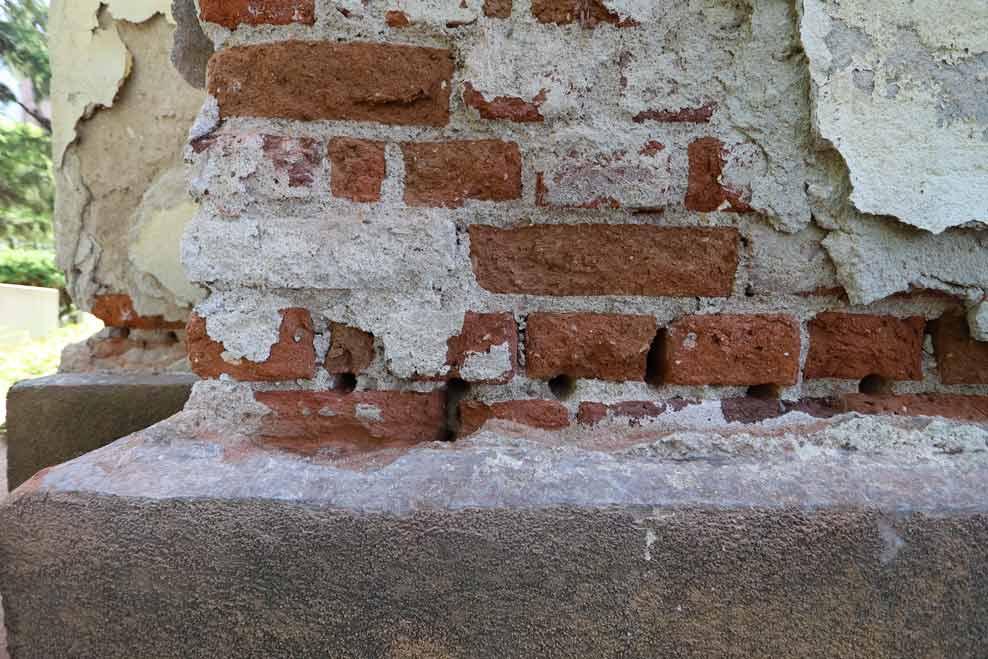
Why Removing Old Plaster is Critical Before Treating Rising Damp
Many homeowners make the same mistake: they attempt to solve rising damp by injecting products through existing plaster or simply "sealing" the wall with a new coat of paint. This approach is not only ineffective but can actually accelerate the structural decay of the building. If you are planning a treatment with professional systems like Bikol® Capillary Barrier +, removing the old plaster is one of the most vital steps in the process.
Reasons Why Old Plaster Must Be Removed
1. The Destructive Force of Salt Crystallization
Moisture rising through walls carries dissolved salts. As water evaporates from the surface, these salts crystallize, increasing their volume by up to 12 times. This process exerts a massive "wedging pressure" within the material matrix, which literally detaches the plaster and degrades the internal structure of bricks or stones.
2. Eliminating the Source of Mold
Old, damp plaster acts as a reservoir for moisture and contaminants. It provides the perfect breeding ground for mold and fungi, which not only ruin the aesthetics of your home but also pose serious health risks, including allergies and respiratory issues.
3. Ensuring Precise Access for Injection
To be effective, Bikol® Capillary Barrier + must be injected directly into the mortar joints of the masonry. Removing the plaster reveals these joints, allowing for precise drilling and ensuring the product reaches the heart of the wall.
4. Preventing the "Sealing" Effect
The success of a capillary barrier depends on proper application. If you don't remove the plaster, you cannot see where to drill effectively. Furthermore, applying new coatings over old, damp plaster traps moisture inside, forcing it to rise even higher in search of an exit point, expanding the damage zone.
Step-by-Step Wall Preparation Guide
Correct execution ensures that your investment in moisture protection pays off in the long run.
- Determine the Scope: Remove all coatings that show signs of damage, such as bubbling, staining, or crumbling.
- Treatment Height: Strip the plaster to at least 50 cm above the visible line of maximum moisture.
- Cleaning the Drill Holes: Before injection, use compressed air or a vacuum to clean the holes. Residual dust or debris can prevent the wall from fully absorbing the capillary barrier product.
- Restoration with a Breathable System: After injection, use a specialized macroporous plaster based on natural hydraulic lime (such as the CALIBRO NHL system). It is salt-resistant and allows the masonry to "breathe."
- Ensure Ventilation: Even with new plaster, evaporated moisture must be removed from the rooms through adequate natural or forced ventilation to prevent stagnant humidity.
Risks of Leaving Old Plaster in Place
Neglecting preparation leads to serious technical and financial consequences:
- Mechanical Failure: The ongoing expansion pressure from salts will eventually destroy even the most expensive new cosmetic finishes.
- The Illusion of Failure (Hygroscopicity): Old plaster is saturated with hygroscopic salts (nitrates and chlorides) that attract moisture directly from the air. Even if the capillary barrier works perfectly, the wall will remain damp to the touch because of these salts.
- Health Hazards: Mold spores trapped in old plaster remain active and can trigger asthma and rheumatism in residents.
- Structural Compromise: Constant moisture and salt crystallization weaken the static stability of the building and degrade its thermal insulation, leading to higher heating costs.
Conclusion
Removing old plaster is not just "demolition"—it is a technical necessity. Only by exposing the clean masonry and using the correct restoration materials (like CALIBRO NHL) can you guarantee a dry and healthy home.
Need a consultation to choose the right system for your building? Contact our team for professional advice.