
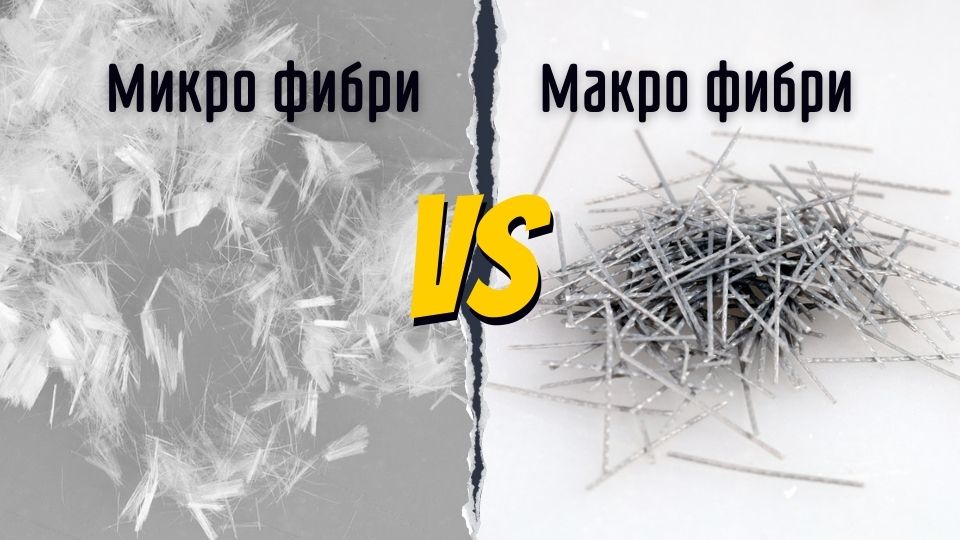
Polypropylene-based synthetic fibre reinforcement is widely used in modern concrete technology, providing improvements in residual strength, durability and overall performance. There are two recognised types of synthetic fibres for concrete: micro and macro, each designed for different functions and benefits.
What Are Synthetic Concrete Fibres?
Synthetic concrete fibres are made from materials such as polypropylene or polyethylene and are added directly to the concrete mix. They improve properties including shrinkage crack control, residual strength and durability. These fibres are lightweight, corrosion-free and resistant to alkalis and salts.
Micro Synthetic Fibres for Concrete
Micro polypropylene fibres are extremely fine, typically 10–20 microns in diameter and 6–20 mm in length. According to EN 14889-2:2006, they are classified as fibrillated or monofilament fibres under 0.30 mm in diameter.
Micro fibres provide no structural benefit to hardened concrete and must not be used as structural reinforcement. Their primary function is to control early-age plastic shrinkage cracking. They are also highly effective for passive fire protection in tunnel linings. Micro fibres should be considered an additive only.
Benefits of Micro Fibres
- Control of plastic shrinkage cracking during early curing
- Reduction of curling while concrete is in a plastic state
- Improved fire performance by reducing concrete spalling
Applications of Micro Fibres
- Slabs on grade – industrial, residential and commercial flooring
- Tunnel linings – passive fire protection
Macro Synthetic Fibres for Concrete
Macro synthetic fibres are larger and coarser than micro fibres, with equivalent diameters typically between 0.5 and 1.0 mm and lengths up to 65 mm. They increase post-crack residual capacity and can be used for crack control and structural reinforcement.
Macro synthetic fibres can deliver performance comparable to steel mesh and steel fibre reinforcement, without corrosion-related issues.
Benefits of Macro Fibres
- Increased post-crack residual strength
- Improved durability due to corrosion resistance
- Greater ductility and crack control
- Lower material, labour and construction costs
- Reduced carbon footprint compared to steel reinforcement
Applications of Macro Fibres
- Shotcrete and sprayed concrete
- Industrial and commercial concrete flooring
- Precast concrete elements
- Pavements, roads and concrete track slabs
Choosing Between Micro and Macro Fibres
Micro and macro fibres are not interchangeable. Each type is engineered for a specific role, and using the wrong fibre can significantly affect concrete performance.
- Use micro fibres for early-age shrinkage crack control or passive fire protection.
- Use macro fibres for structural performance, crack control and long-term durability. To replace steel reinforcement, use only macro synthetic fibres.
Can One Fibre Type Replace the Other?
Micro fibres cannot replace macro fibres in structural or shotcrete applications, as they provide no residual strength after concrete hardening. Likewise, traditional macro fibres are generally ineffective for early-age shrinkage crack control or fire protection.
An exception is BarChip MQ58, whose multi-strand design delivers both residual strength and effective plastic shrinkage crack control, combining the benefits of micro and macro fibres in slab-on-ground applications.
Conclusion
Both micro and macro polypropylene fibres play an important role in modern concrete construction. Understanding their differences allows engineers and builders to select the correct solution, resulting in more durable, resilient and cost-effective concrete structures. Choosing the wrong fibre can lead to concrete failure.
From small residential projects to large-scale infrastructure, BarChip macro synthetic fibre reinforcement can significantly improve the quality, durability and overall cost efficiency of concrete works.