
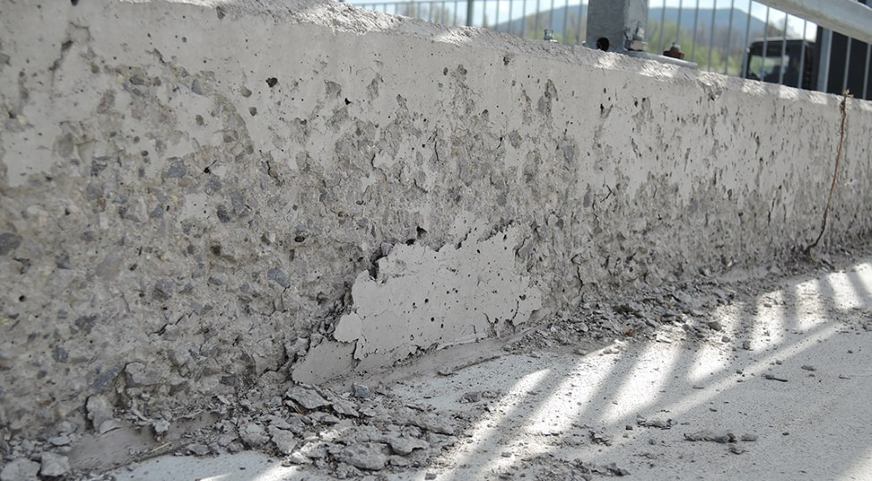
At first glance, a concrete driveway, wall, garage floor or industrial floor may appear solid and dense. In reality, concrete is a porous material whose capillary structure allows water to penetrate and move through it.
This does not mean that the concrete is of poor quality. Pores and capillaries are a natural part of its structure. Their quantity, size and connectivity, however, depend on the mix composition, water-cement ratio, admixtures used, placing conditions, and the way the concrete dries and cures.
How does the capillary structure of concrete form?
The water in a concrete mix participates in the hydration of the cement and provides the workability required during placement. However, not all of this water becomes chemically bound.
During hardening and drying, an interconnected system of microscopic pores and capillaries forms within the concrete. It is this system that allows rainwater, melting snow and other liquids to penetrate into the structure of the material.
The more open and interconnected the capillary network is, the more easily the concrete can absorb water through capillary action.
What does water carry with it?
Water penetrating into concrete is rarely completely pure. Along with it, dissolved salts, chlorides and other aggressive substances can enter the porous structure of the concrete.
This is particularly important for:
- garages and car parks where vehicles bring in water and de-icing salts during winter;
- external concrete pavements and ramps;
- bridges, tunnels and transport infrastructure;
- port and coastal structures;
- façades and architectural concrete elements exposed to weather conditions;
- warehouses, production facilities and commercial areas subject to intensive use.
What can happen after water penetrates the concrete?
Water penetration creates conditions for various deterioration processes, many of which remain invisible during their early stages.
Freeze-thaw cycles
When water within the capillary structure freezes, it expands and creates internal stresses within the material. Repeated freeze-thaw cycles can lead to microcracking, surface scaling and gradual deterioration of the upper layer of the concrete.
Reinforcement corrosion
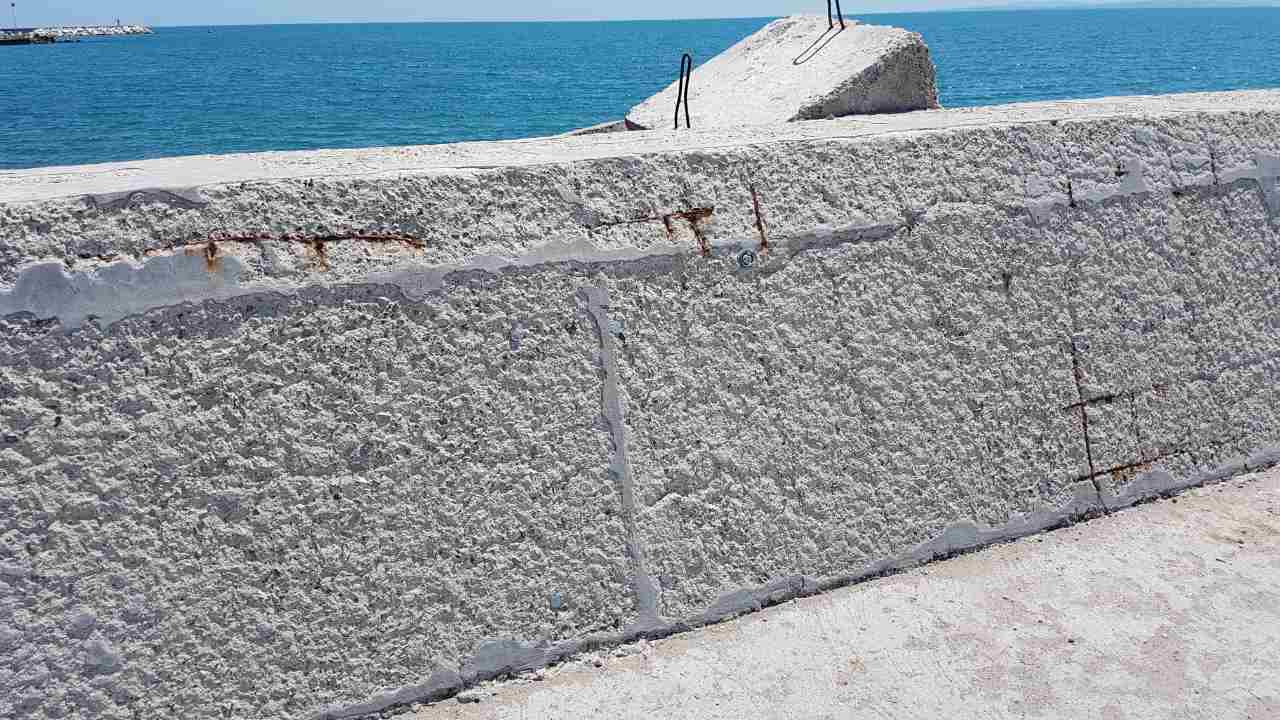
Concrete normally provides a highly alkaline environment that creates a passive protective layer around steel reinforcement. When chlorides penetrate the concrete, or when alkalinity is reduced as a result of carbonation, this protection can be compromised.
In the presence of moisture and oxygen, corrosion of the steel can begin. The corrosion products occupy a greater volume than the original metal, creating stresses around the reinforcement. As a result, the concrete may crack, spall and lose parts of the protective concrete cover.
Leaching and formation of deposits
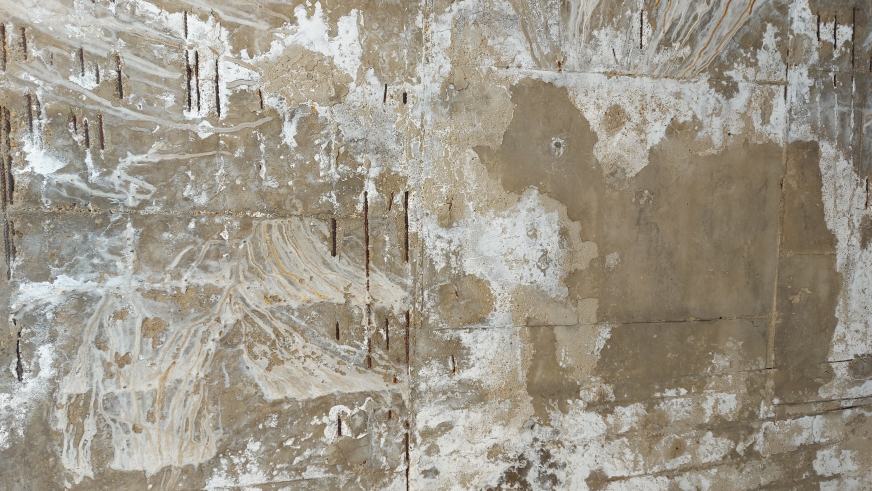
The movement of water through concrete can transport water-soluble compounds towards the surface. As the water evaporates, or as these compounds react with carbon dioxide, white deposits and secondary crystallisation products may form.
These are not merely an aesthetic problem. Continuous movement of water can gradually alter the structure of the surface layer and contribute to its deterioration.
Why is a surface coating not always enough?
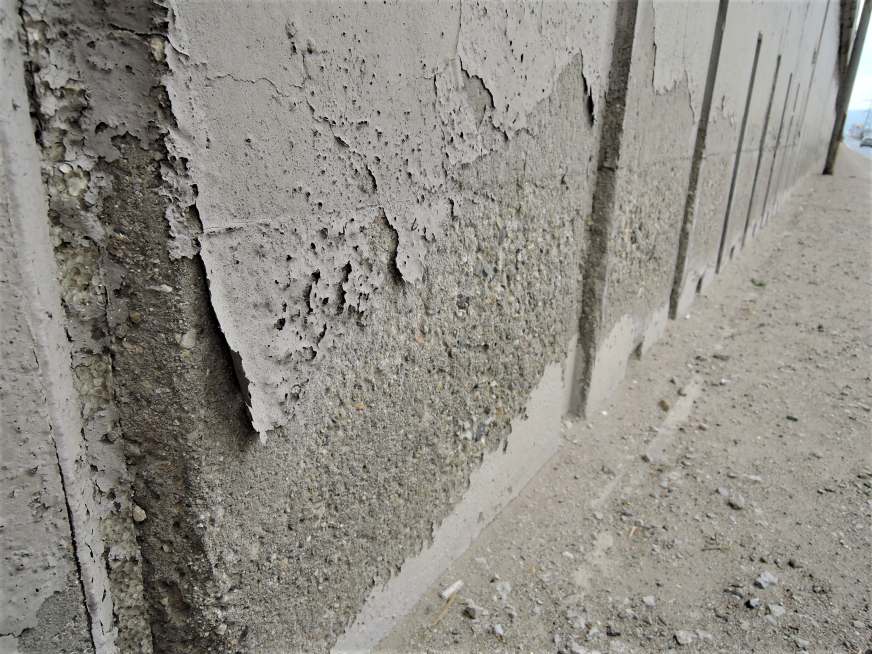
Film-forming paints and coatings serve a different purpose by creating a protective layer on the surface of the concrete. When properly designed and applied, they can be an important part of an overall protection system.
Problems may arise when there is capillary moisture coming from the substrate, residual moisture within the concrete, or when an unsuitable system has been selected. In such cases, water and water vapour can create pressure beneath the coating.
Possible consequences include:
- blistering;
- reduced adhesion;
- delamination of the coating;
- formation of salts and crystals beneath the coating;
- deterioration of the concrete beneath the protective layer.
For this reason, protection should not be considered solely as sealing the visible surface. In certain situations, it is necessary to reduce the capillary movement of water deeper within the concrete.
How does deep hydrophobization work?
With deep hydrophobization, the product penetrates into the capillary structure of the concrete without forming a continuous film on the surface.
The molecules of the deep hydrophobic treatment are significantly smaller than the pores in the concrete. This allows them to penetrate into the concrete matrix and chemically bond to the internal walls of the capillaries.
This treatment changes the way the porous structure interacts with water. Capillary penetration of liquid water is significantly reduced while the migration of water vapour remains possible.
The concrete retains its water vapour permeability because the pores are not blocked by an impermeable film.
Learn more: How do SiloTreat® impregnating products work? (link)
SiloTreat® Concrete DH: deep protection for concrete
SiloTreat® Concrete DH is a deep hydrophobic treatment for concrete designed to reduce capillary water penetration and the deterioration processes associated with it.
The product penetrates deep into the porous structure and chemically bonds to the internal walls of the capillaries. This creates a protected hydrophobic zone beneath the surface of the concrete.
Because the active zone is located below the surface, the performance of the product does not depend solely on the uppermost surface layer. This makes the protection significantly less vulnerable to ultraviolet exposure, wind erosion and surface abrasion.
Main benefits of SiloTreat® Concrete DH
- reduces capillary penetration of liquid water;
- maintains the water vapour permeability of the concrete;
- does not form a surface film;
- does not visibly alter the appearance of the treated concrete;
- reduces the amount of water available to participate in damaging freeze-thaw cycles;
- can help extend the service life of concrete elements;
- can be used as a preliminary deep treatment before certain paints and coatings;
- can be combined with SiloTreat® Concrete BE for additional surface protection.
Where can it be used?
- concrete garages and ramps;
- car parks and parking structures;
- industrial and warehouse floors;
- exposed and architectural concrete;
- bridge structures;
- tunnels and underpasses;
- concrete panels;
- port facilities;
- reinforced concrete structures;
- hydraulic engineering structures;
- fibre cement façade panels.
Video: See how deep hydrophobic treatment is applied to a concrete garage floor using SiloTreat® Concrete DH.
What about stains, oils and dirt?
Deep protection reduces the penetration of water into the capillary structure, but in garages, car parks, showrooms and exposed concrete surfaces there is often another requirement – the surface should resist staining and be easier to clean.
Concrete may be exposed to oils, liquids, mud, soot and various contaminants. External concrete elements are also exposed to rain stains, darkening, moss, algae and other biological contamination.
For these situations, protection that works primarily within the surface zone of the material is required.
SiloTreat® Concrete BE: water- and oil-repellent surface protection
SiloTreat® Concrete BE is a surface hydrophobic treatment with water- and oil-repellent properties for absorbent concrete surfaces.
The product molecules chemically bond within the surface zone of the concrete and create high surface tension. Water and oils form droplets and have greater difficulty penetrating the treated substrate.
Unlike conventional film-forming coatings, the product does not seal the concrete with a dense impermeable layer. The water vapour permeability of the material is maintained.
Main benefits of SiloTreat® Concrete BE
- provides water- and oil-repellent properties;
- reduces the penetration of stains and contaminants into the surface;
- helps keep concrete cleaner for longer;
- makes subsequent cleaning easier;
- maintains the water vapour permeability of the material;
- does not form a dense surface film;
- does not significantly alter the natural appearance of the concrete;
- reduces surface wetting and the conditions that favour the development of moss, algae and biological contamination;
- can be applied after treatment with SiloTreat® Concrete DH.
Video: See a demonstration of the water- and oil-repellent effect of SiloTreat® Concrete BE on a concrete floor.
SiloTreat® Concrete DH or Concrete BE: which product should you choose?
The two products are not interchangeable. They work at different levels within the concrete structure and address different requirements.
Choose SiloTreat® Concrete DH when:
- the main objective is to reduce capillary water penetration deep within the concrete;
- the concrete is exposed to freeze-thaw cycles;
- there is a risk of salts and chlorides penetrating the concrete;
- the surface is exposed to traffic or abrasive wear;
- a compatible paint or coating will subsequently be applied and moisture load from the substrate needs to be reduced;
- protection is required without altering the natural appearance of the concrete.
Choose SiloTreat® Concrete BE when:
- the main objective is surface repellency against water and oils;
- you want to reduce staining;
- the surface needs to be easier to clean;
- you are treating exposed or architectural concrete;
- you want to reduce darkening caused by wetting;
- you want to reduce the conditions that favour moss, algae and other biological contamination.
SiloTreat® Concrete DH + Concrete BE system
When a project requires both deep and surface protection, the two products can be used as a system.
SiloTreat® Concrete DH is applied first. It penetrates into the capillary structure and reduces the movement of liquid water deeper within the concrete.
After a minimum technological interval of two weeks, SiloTreat® Concrete BE can be applied. It complements the system by providing water- and oil-repellent protection within the surface zone.
This combines:
- protection of the capillary structure;
- maintenance of water vapour permeability;
- reduced surface wetting;
- reduced penetration of oils and contaminants;
- easier maintenance of the treated surface.
Important: Before combining these products with other products, paints or coatings, the compatibility of the entire system should be verified and the instructions in the current technical documentation should be followed.
Why do we recommend a preliminary test on architectural and specialised concrete?
Two concrete surfaces may look similar but have different absorption characteristics, porosity, texture and surface treatment. The age of the concrete, mix composition, admixtures used and any previous treatments are also important factors.
For exposed concrete, façade elements, decorative cladding and other surfaces with high visual requirements, we recommend carrying out a preliminary test on a small, representative area or on a separate sample.
The test makes it possible to assess in advance:
- the absorption capacity of the specific material;
- the required amount of product;
- the behaviour of water on the treated area;
- any possible change in visual appearance;
- the appropriate application method;
- compatibility with the specific concrete surface.
Video test: See how we test hydrophobic protection on concrete cladding before treating the entire surface.
Concrete protection for residential and professional projects
The appropriate protection system depends on the type and condition of the concrete, its absorption capacity, the service environment and the expected result.
For residential projects, this may include a concrete garage, driveway, fence, terrace or façade cladding. For professional projects, protection may be required for warehouses and production facilities, car parks, ramps, commercial buildings, bridges, tunnels or hydraulic engineering structures.
For a specific project, you can contact the Leaf Group team. We will review the service conditions, photos and surface requirements and help you select the appropriate product, system and application method.