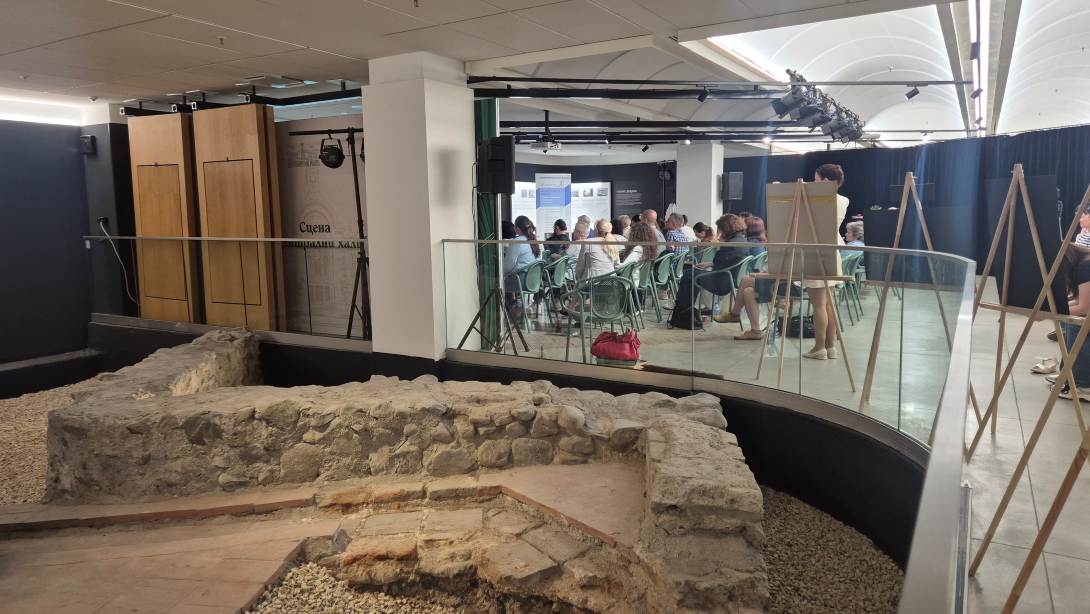
In mid-June, Sofia became a meeting point between science, practice, and the people who work every day to preserve cultural heritage.
The international practical seminar “Nanotechnologies in Restoration”, organized by Leaf Group at the Central Sofia Market Hall Stage, brought together restorers, architects, scientists, designers, museum professionals, academics, and companies with extensive experience in working on historic buildings.
Among the participants were representatives of the Ministry of Culture, the National Institute for Immovable Cultural Heritage, Sredets District, regional history museums from across Bulgaria – Plovdiv, Varna, Ruse, Veliko Tarnovo, Perushtitsa, Sofia, Petrich and others, representatives of the National Archaeological Institute with Museum at BAS, architects and designers managing projects for the restoration of immovable cultural heritage, research laboratories, lecturers and specialists from the University of Architecture, Civil Engineering and Geodesy and the National Academy of Art, representatives of the Sofia High School of Civil Engineering, Architecture and Geodesy “Hristo Botev”, as well as companies specializing in the restoration and renovation of historic buildings.
Science Made Accessible
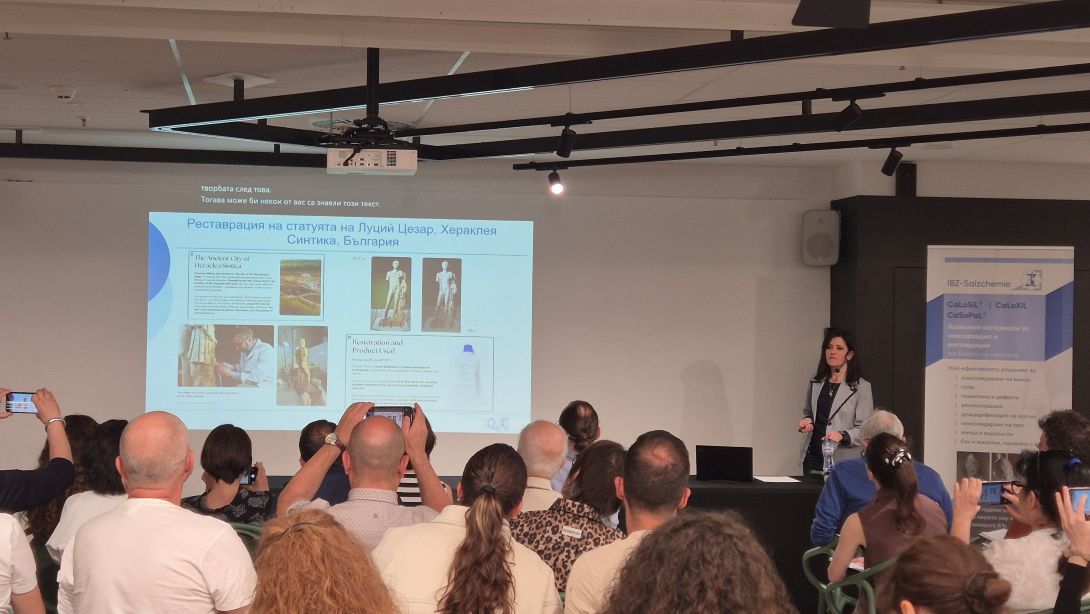
Prof. Gerald Ziegenbalg, Dr. Sven Ziegenbalg and M. Sc. Antonia Tigrano from IBZ-Salzchemie GmbH & Co. KG, Germany, presented much more than products and technologies.
They achieved something far more difficult – translating complex scientific knowledge into practical understanding.
Without unnecessary distance. Without academic heaviness.
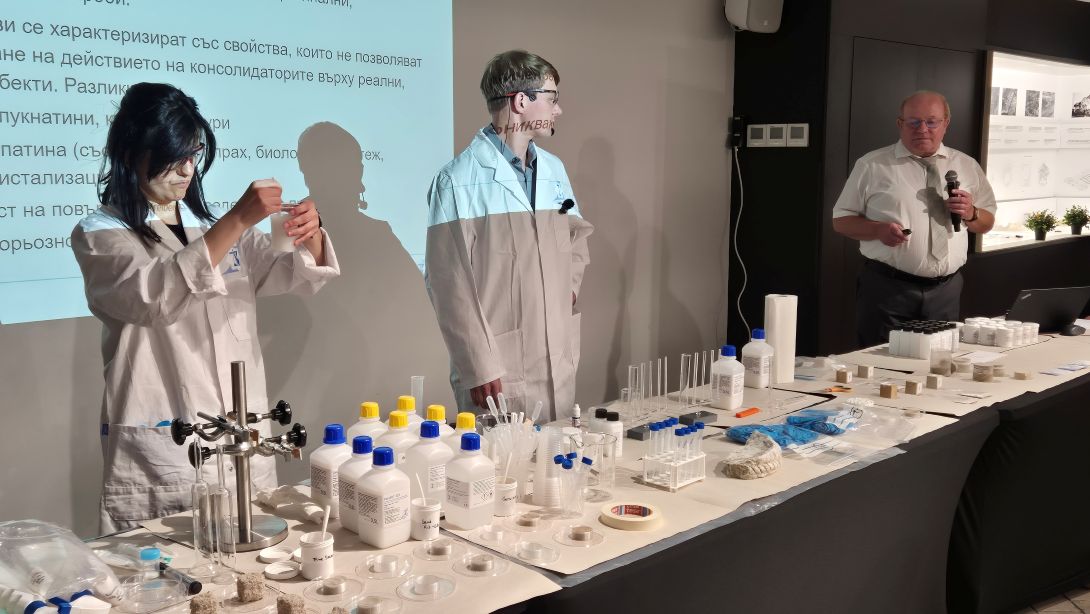
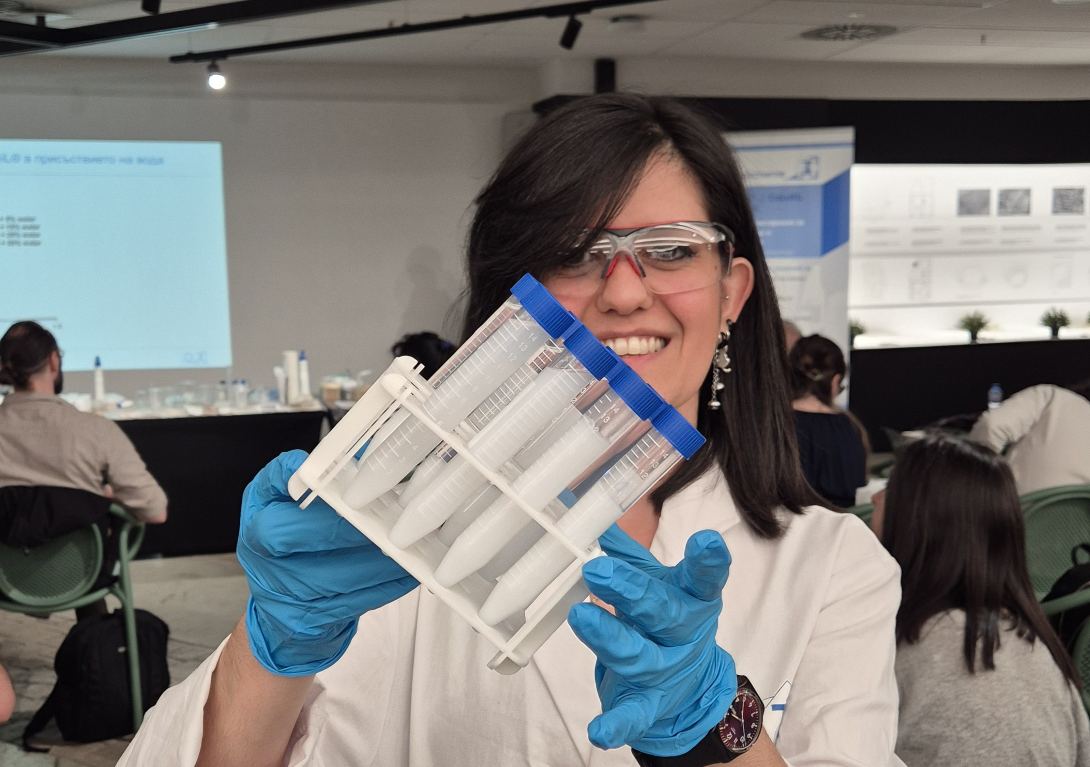
Instead of a one-way presentation, participants were encouraged to ask questions, compare approaches, and search for solutions together.
Theory naturally evolved into demonstrations, and demonstrations evolved into discussions.
This approach transformed the seminar from a training session into a true professional exchange of knowledge and experience.
From Theory to Real Case Studies
During the preparation of the event, participants were invited to bring their own samples and fragments.
The response exceeded expectations.
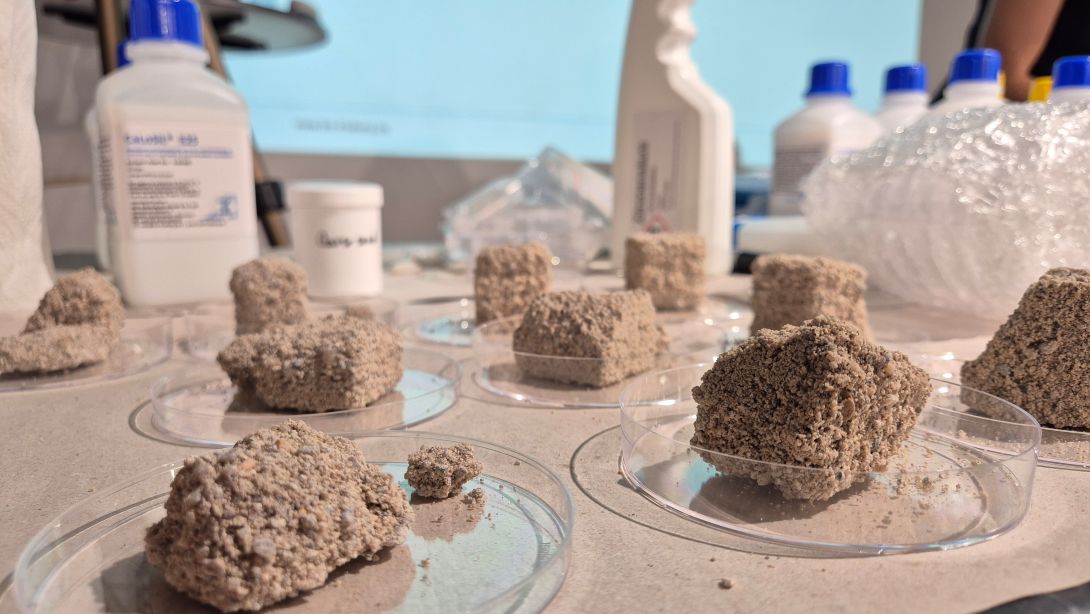
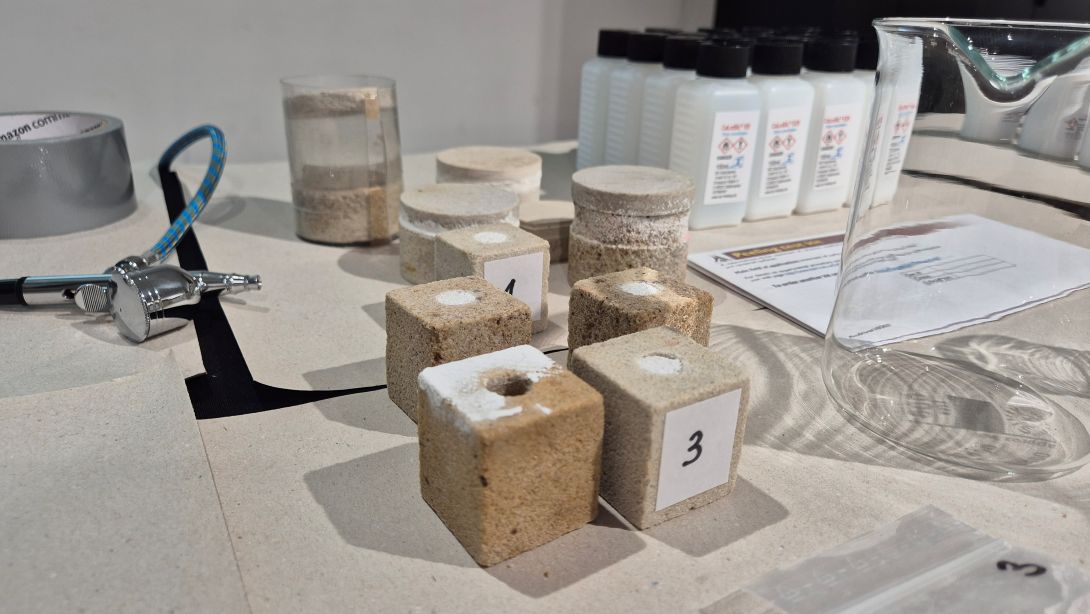
The demonstration table quickly filled with real materials from ongoing projects – stone, mosaics, plaster, wall paintings, and surfaces with different levels of deterioration.
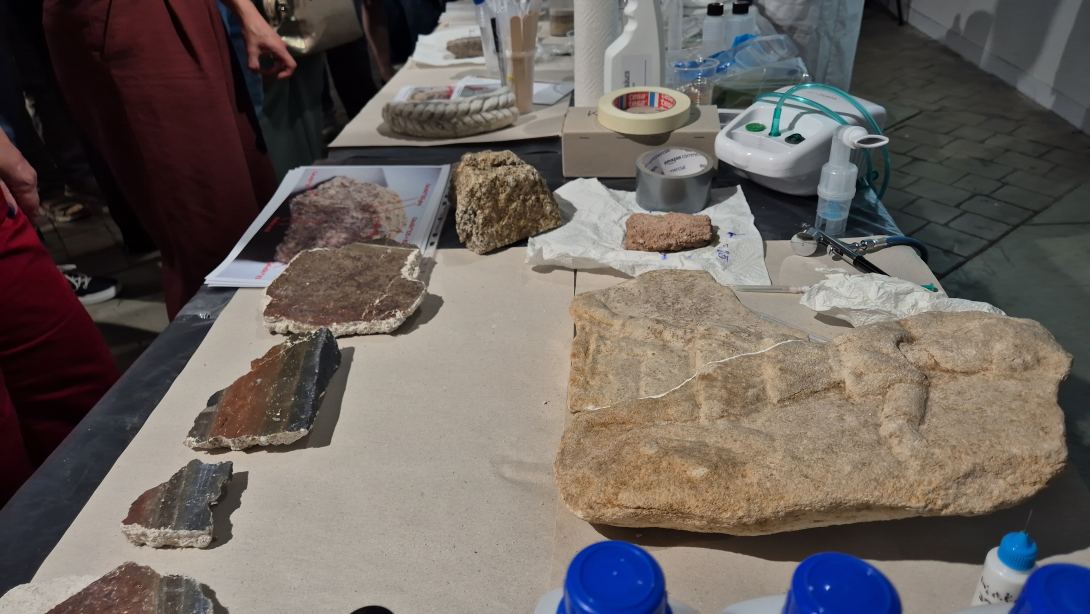
Instead of working with standard laboratory samples, something much more valuable happened – the analysis of real restoration challenges.
The products were tested directly on the materials brought by participants, results were discussed on site, and solutions were developed according to the specific characteristics of each object rather than following universal formulas.
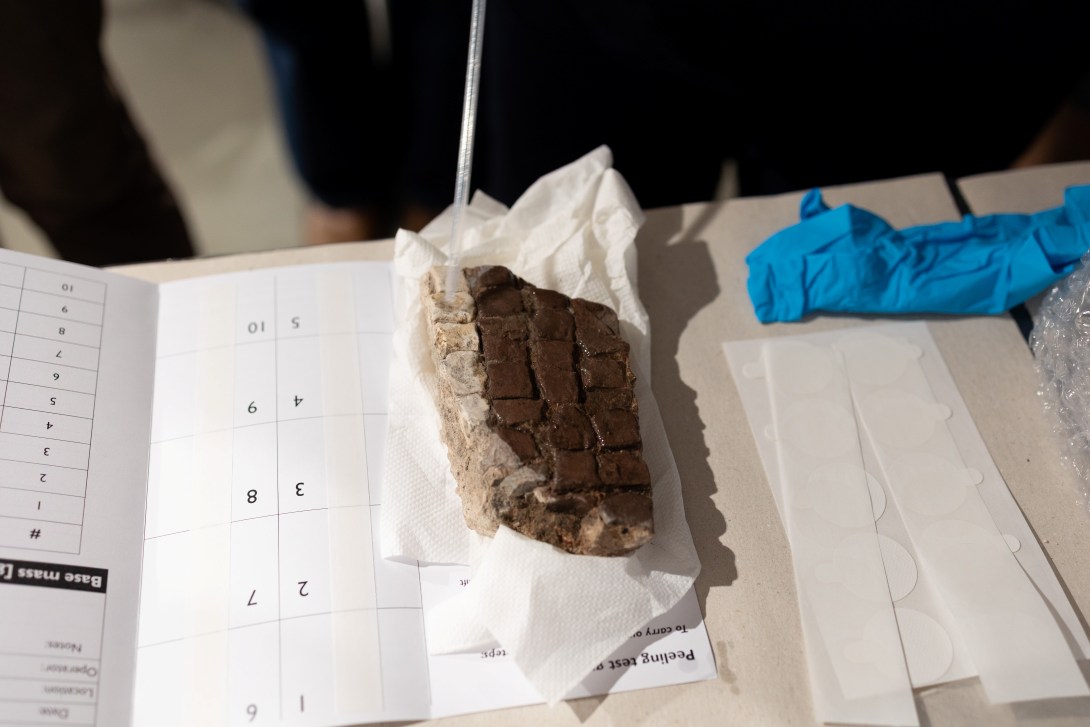
Prof. Ziegenbalg and his colleagues repeatedly shared how positively surprised they were by the engagement of Bulgarian professionals – by the depth of the questions, attention to detail, and willingness to engage in meaningful professional discussions.
A clear sign of the interest was the fact that on the second day additional participants joined the already existing group of more than 50 attendees.
Light in the Darkness: A Symbol of a Shared Cause
The event will also be remembered for one unexpected yet symbolic moment.
During the practical demonstrations, the power briefly went out.
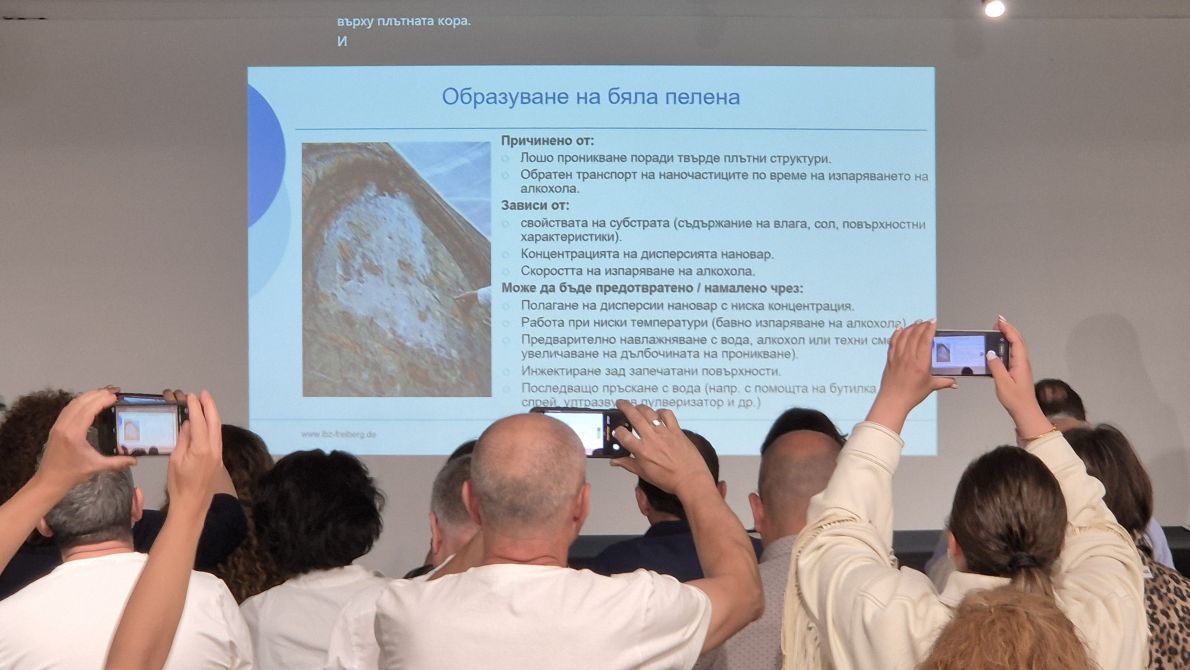
Instead of interrupting the work, the room fell silent for a second, and then dozens of phone flashlights illuminated the demonstration table.
The workshop continued under the shared light of mobile screens. This small moment perfectly captured the atmosphere throughout the seminar – a community and environment where people came not simply to attend, but to participate and exchange experience.
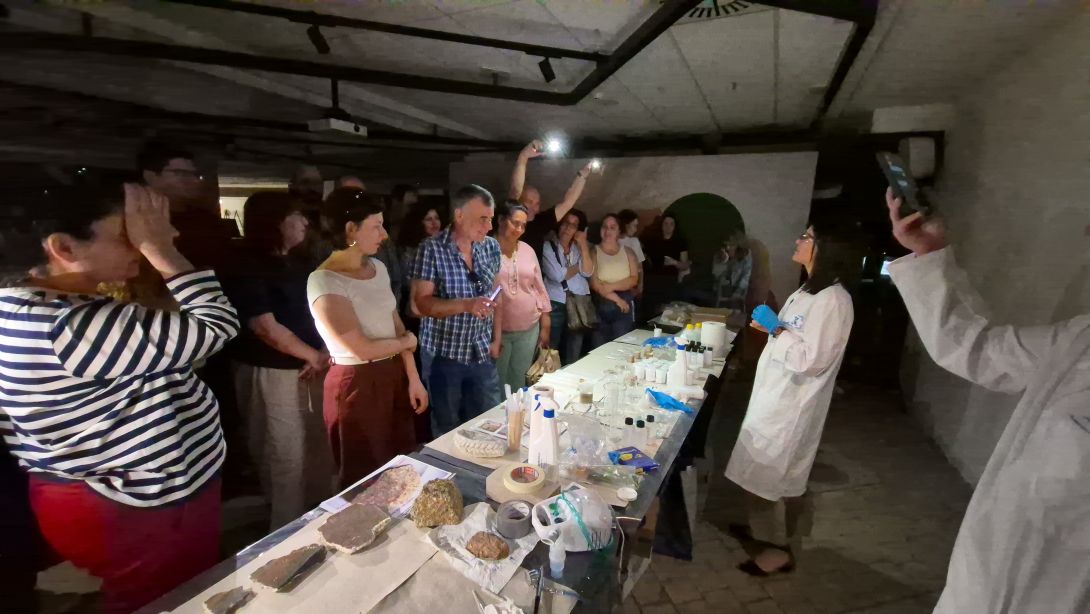
And if half of the success belongs to the lecturers – for turning complex science into accessible, practical and inspiring knowledge – the other half undoubtedly belongs to the participants.
To the questions.
To the curiosity.
To the effort and willingness to bring fragments from their own projects and seek solutions together.
Leaf Group extends its sincere gratitude to all participants for their trust, time, and shared professional experience.
Special thanks go to Dragomir Dimitrov and the team at Kaufland Bulgaria for their invaluable support and assistance throughout every stage of the organization. Thanks to this partnership, we created an environment of international standard where the focus remained exactly where it should be – on innovation, science, and the future of Bulgaria’s cultural heritage.
See you again soon!